

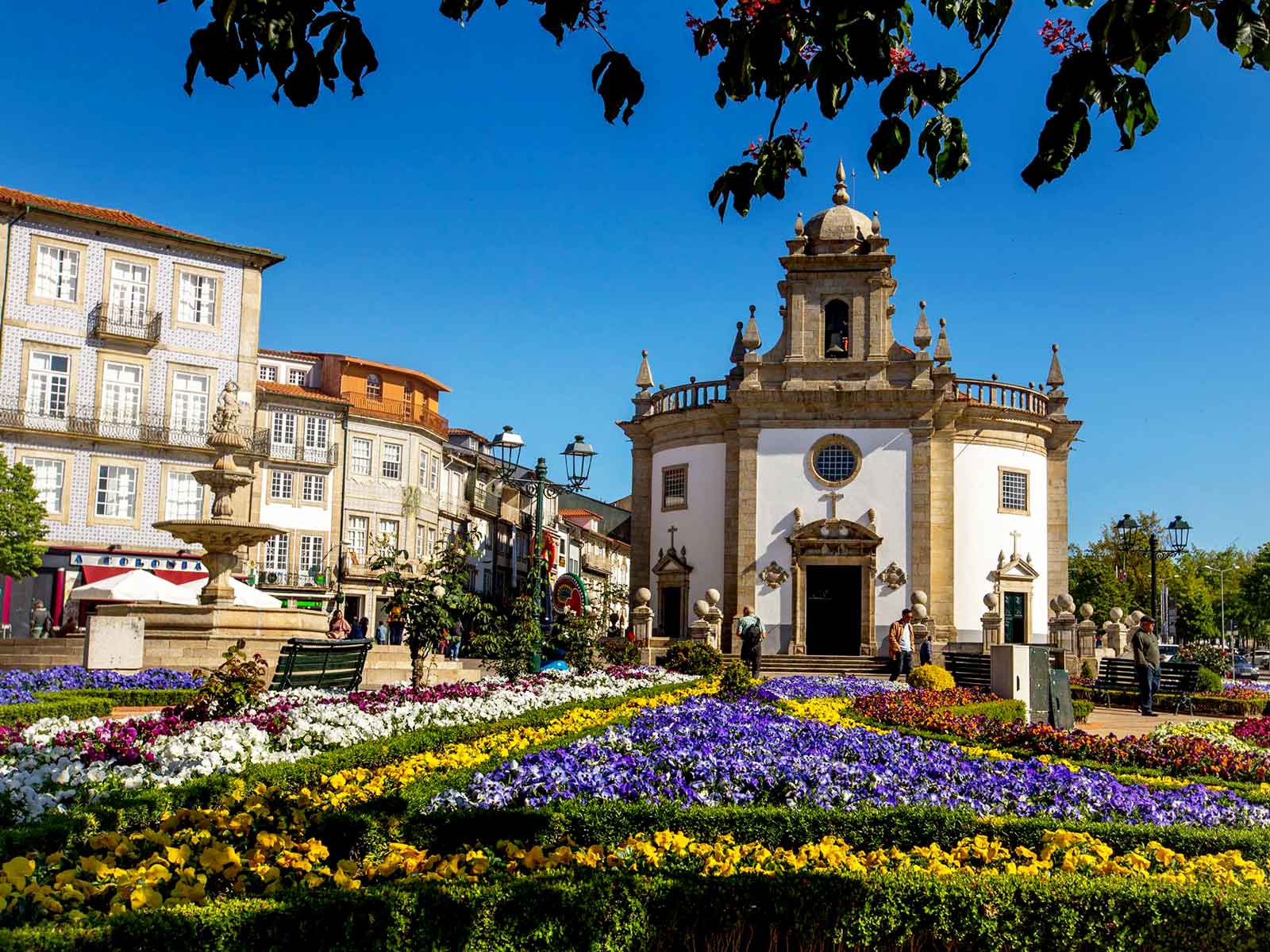
Having been created in 1520, the brotherhood of Misericórdia de Viana developed in such a way that, at the beginning of the second quarter of the 16th century, the board decided to build the so-called “Casa das Varandas”. This building, dating from 1589, is a unique example of Renaissance and Mannerist-inspired architecture, with Italian and Flemish influences. In 1716, work began to remodel the church, handed over to the military engineer from Viana, Manuel Pinto de Vilalobos. Its interior is rich in decoration, in keeping with the taste of the time, whether for the carvings in the national style by Ambrósio Coelho, or for the beautiful tile coverings, painted by Policarpo de Oliveira Bernardes, or even for the frescoes on the ceiling by Manuel Gomes. It is, without a doubt, one of the best Baroque examples in the whole country.
The Misericórdia building and the Church date back to the 16th century. XVI.
Created in 1520, the confraternity of Misericórdia developed in such a way that, in the second quarter of the 16th century, they decided to build the so-called “Casa das Varandas”. The building, from 1589, is a unique example of Renaissance and Mannerist-inspired architecture, with Italian and Flemish influences.
In 1716, renovation work on the church began and it was handed over to Viana’s military engineer, Manuel Pinto de Vilalobos. Inside, the church has a great decorative richness corresponding to the trend of the time, whether in the gilded altarpieces in national style, the work of Ambrósio Coelho, or in the tile covering by Policarpo de Oliveira Bernardes, or the frescoes on the ceiling by Manuel Gomes. It is, without a doubt, one of the best Baroque examples in the whole country.
Source: https://www.cm-viana-castelo.pt/visitar/turismo-e-lazer/o-que-fazer/percursos-culturais/