

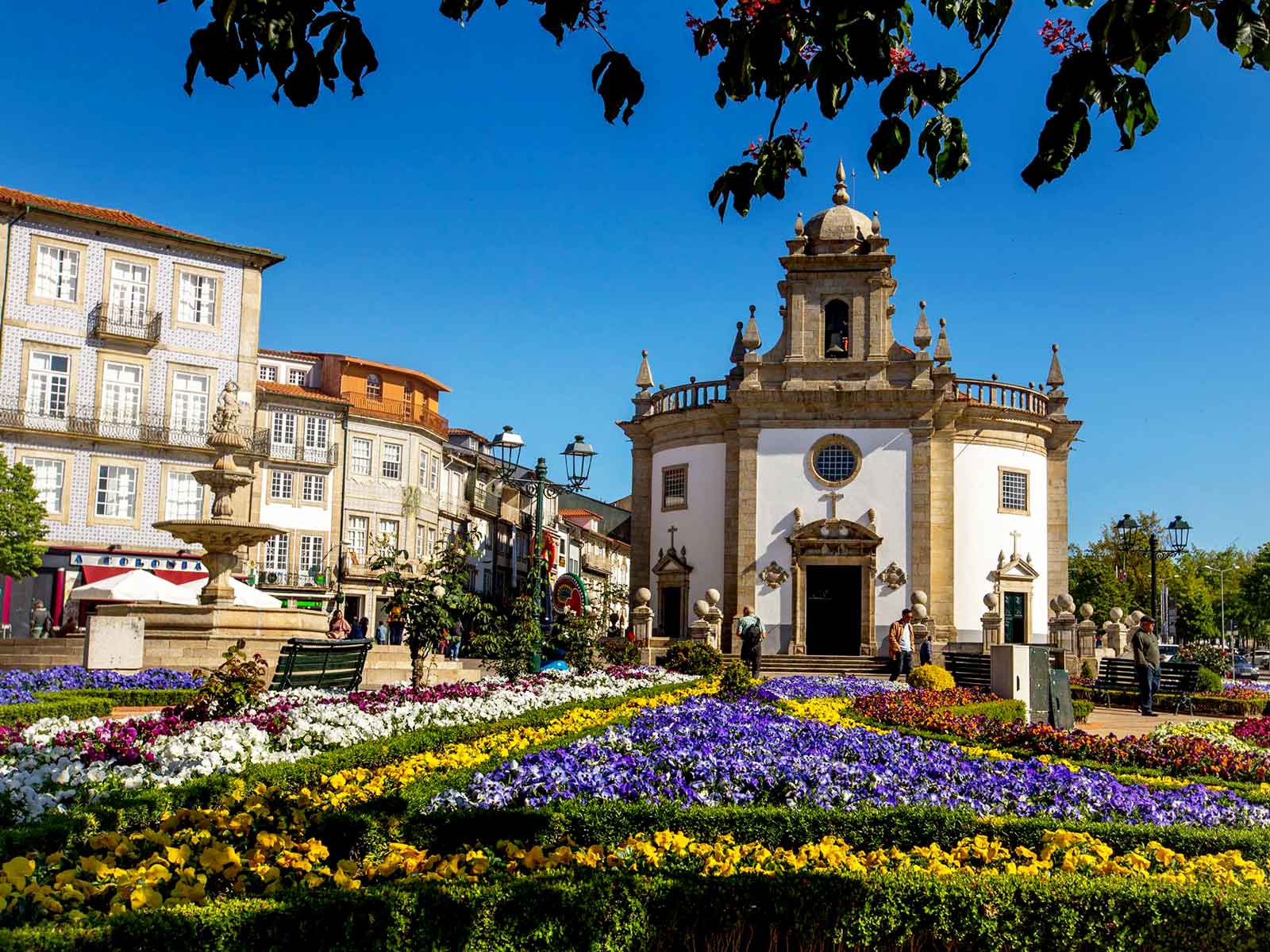
It is thought that Igreja da Misericórdia was built at the end of the 15th century or in the middle of the beginning of the 16th (when the Manueline style was established).
It has been classified as a Monument of Public Interest since 2013.
The Church underwent its first rebuilding in 1678, followed by another after the 1755 earthquake, by the hand of the provider Miguel Inácio Falcão Beja, who reversed its orientation. In 1895, it was set on fire, but this fact did not bring important changes to the temple.
In the set of its frontage, where the Manueline chancel was formerly located, the high portal and the baroque window stand out – where a clover cross and a heart-shaped medallion with the five wounds of Christ were placed -, along with the developed and wide access staircase, paved with several fragments of sepulchral tombstones.
On the left side elevation, three interesting flying buttresses were built, two of which served as a frame for an ornate Manueline portal, where the presence of plant motifs stands out, namely artichokes, which represent the resurrection of Christ. According to some historians, this was the main door of the temple.
The rear elevation facing Praça Conde do Bracial, included the 18th-century chancel – protruding from the body of the church and covered by a gabled roof – the sacristy, with access to the chancel and the chapel of Senhor dos Passos
Inside we find the altarpiece in the chancel, the altar and the dobby with the images of Nossa Senhora das Dores and Senhor dos Passos, the chest of drawers in the sacristy and the baptistery which has a niche with the image of São João Baptista.