

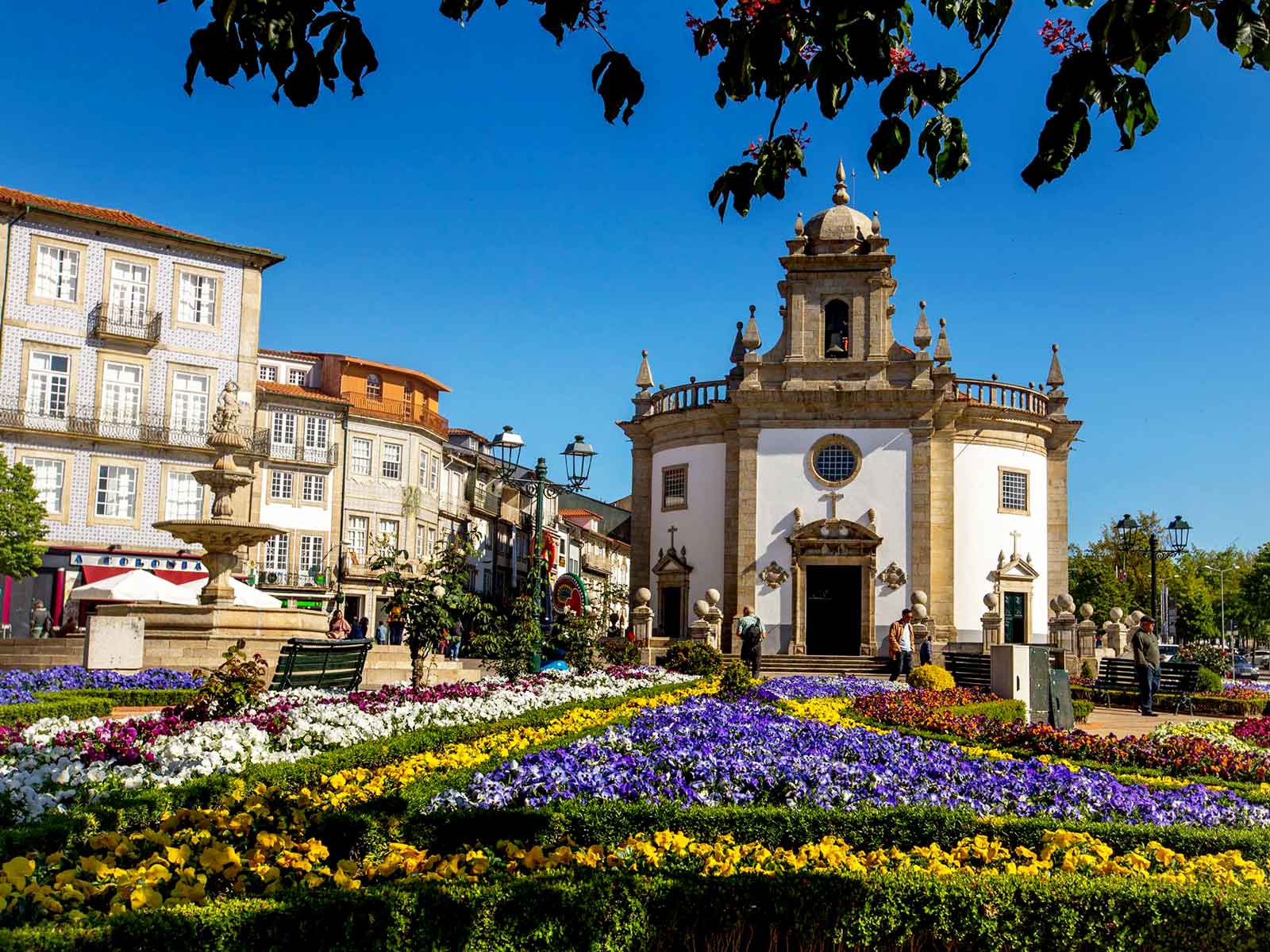
The Mother Church of Nossa Senhora da Conceição dates from the end of the 15th century or the beginning of the 16th century, with Manueline architecture of a regional character.
Classified as a Monument of Public Interest since 2013 and delimited in the Special Protection Zone.
The first temple of Alvalade do Sado was a small chapel possibly built in the 13th or 14th centuries, which was rebuilt and expanded following the attribution of the charter and the status of county.
Currently, it has a staggered longitudinal plan, consisting of a nave and chancel, narrower, with a semi-octagonal forefront, with the bell tower, side chapels, the sacristy, the baptistery and storage facilities.
Of particular note in the interior, with a single nave with a wooden ceiling and a Manueline transept covered by a complex cross vault with ogives with exquisite vegetal decoration in the corbels and stonework keys, is the baroque altarpiece of the high altar.
The vaulted chancel integrates the grandiose altarpiece from the 18th century, in gilded and polychrome carving, in the so-called “National Style”, with a dressing room enclosed by a large canvas, representing Nossa Senhora da Conceição da Oliveira, patron saint of the temple, by Bento Silveira Bunny.
It also includes the throne, flanked by columns, the front of the altar and the tabernacle flanked by access doors to the throne with ashlar moldings. There are many murals on the walls and vaults.
In this building, the strong bell tower stands out externally, pierced by four spans in a round arch, you can see a 17th-century sundial, in stone from Trigaches, considered one of the best examples in the Alentejo.
The façade of the church is torn by an ogival portal in stonework, in the Manueline style, topped by a stone of the coat of arms of the Order of Santiago da Espada, framed at the top by two scallops and at the bottom by two pilgrim’s sticks and surmounted by a window with an ogival arch. .
Noteworthy is the neo-Gothic oculus over the portal that resulted from the various works campaigns due to the 1755 earthquake.