

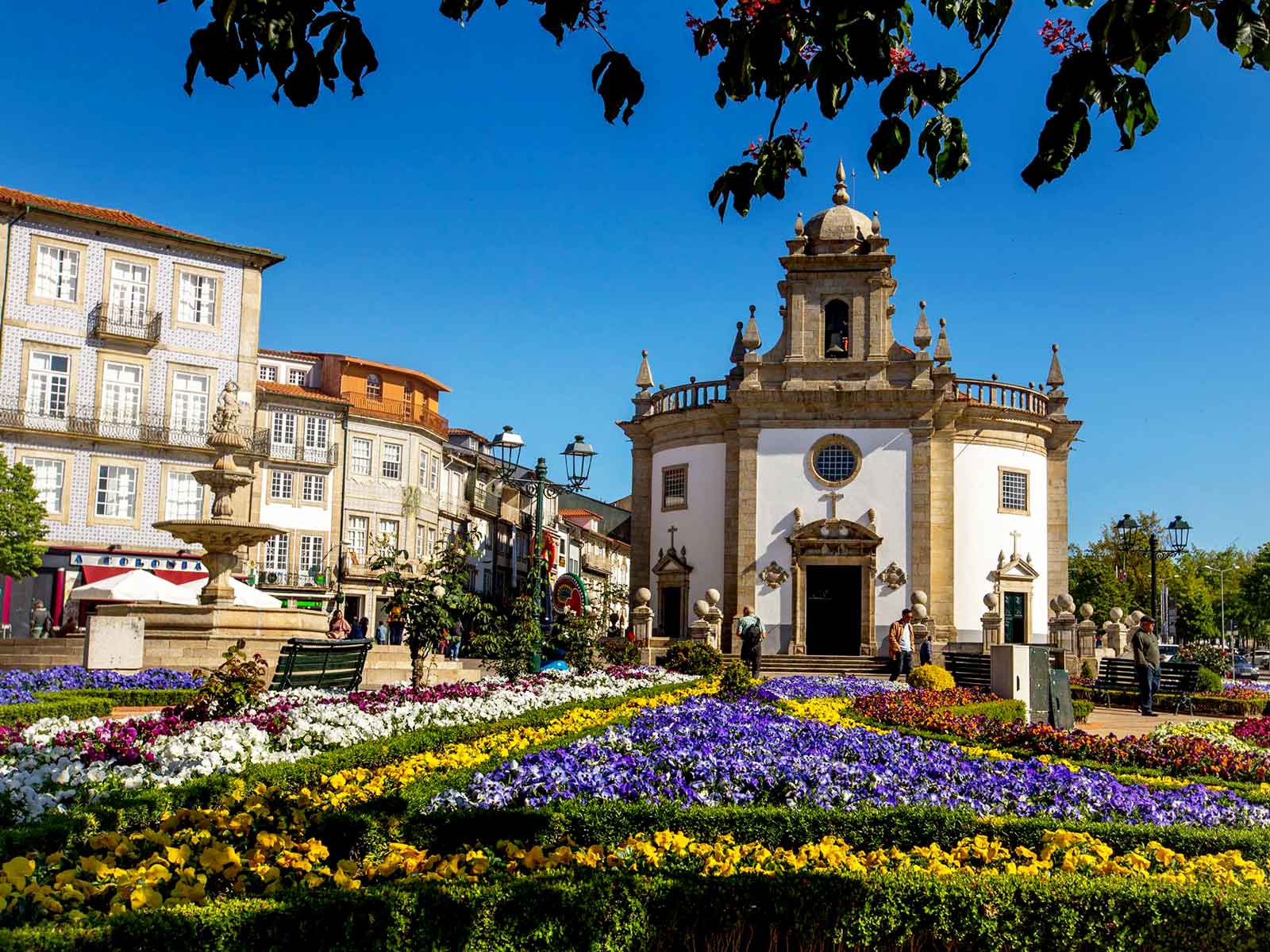
This temple, dedicated to the apostle São Tiago, is of modest construction, having only one nave and a chancel in honor of Senhor Jesus.
This church was donated to the friars of São Marcos in 1452, seven years after the death of the first lord of Vagos – João Gomes da Silva. It was then these friars who came to parish this church. With the extinction of this monastic order, it began to be parishioned by an ecclesiastic of royal appointment.
The “padroados” of Santa Maria and S. Tiago de Vagos were held by the king between 1220 and 1229.
The patronage right was a desirable form of managing ecclesiastical assets. The founder and owner of a church had obligations such as presenting the parish priest, and enjoyed privileges such as food and retirement.
In Vagos, the village was owned by the king, according to the Inquiries of 1220. The Templars owned a couple and a navy, in these same Inquiries.
This temple, dedicated to the apostle São Tiago, is of modest construction, having only one nave and a chancel in honor of Senhor Jesus.
This church was donated to the friars of São Marcos in 1452, seven years after the death of the first lord of Vagos – João Gomes da Silva. It was then these friars who came to parish this church. With the extinction of this monastic order, it began to be parishioned by an ecclesiastic of royal appointment.
Built in the 17th century, the major renovation of this building took place in the second half of the 19th century. XVIII. There were, in addition to the chancel, two more, next to the shoulders; In all, there would be five altars: the high altar, the altar of Senhor Jesus, the altar of the Holy Spirit, the altar of Senhora do Rosário and that of Senhora da Vitória. The chapel of the Blessed Sacrament was closed with iron bars. It had an arch of the chapel of the gospel dating from the century. XVII, of the decadent renaissance.
Source: https://www.cm-vagos.pt/p/igreja_sao_tiago