

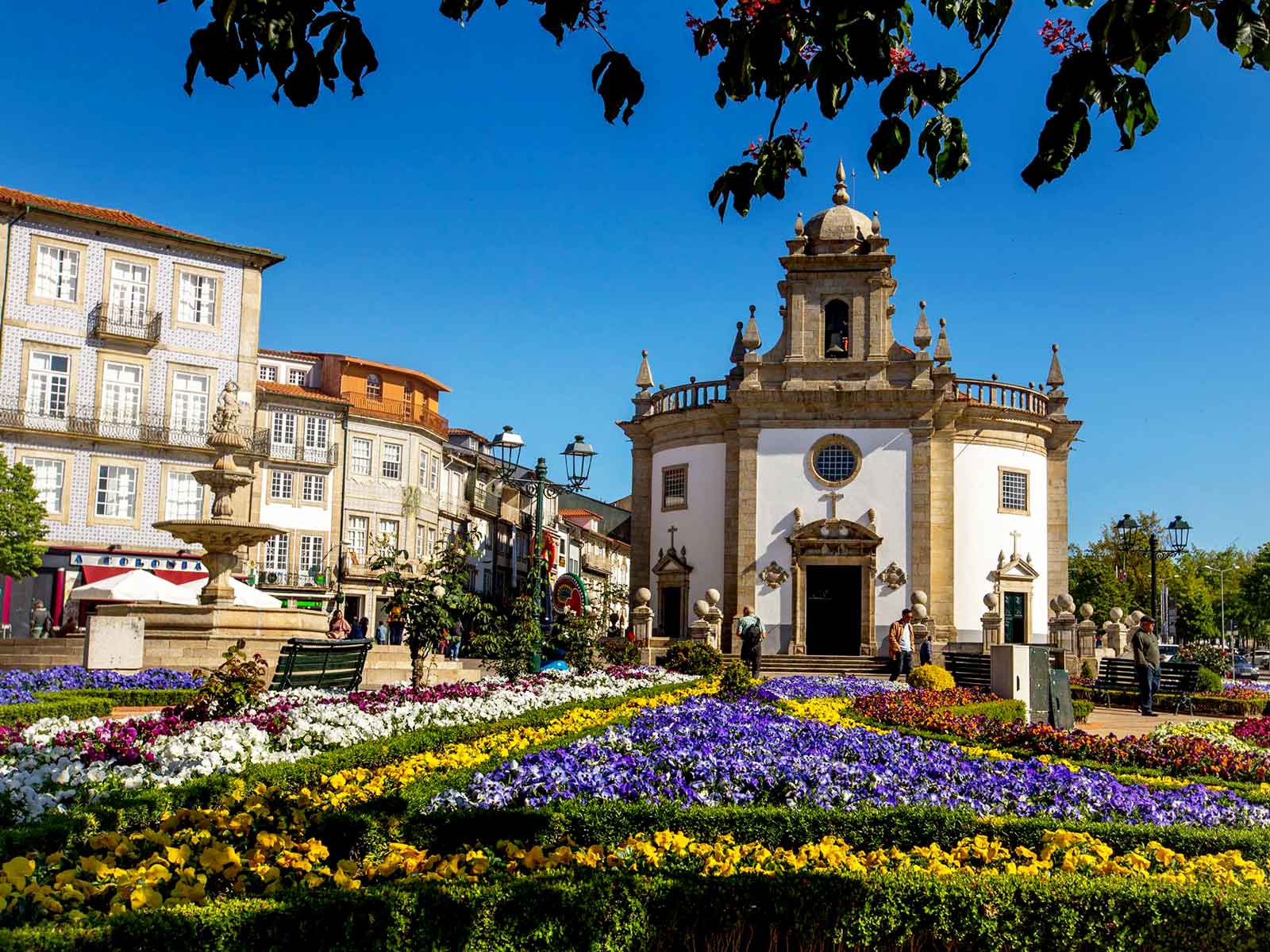
It was built, over several centuries, from a small initial chapel in honor of Nossa Senhora dos Mártires.
The essential part of its construction dates from the time of King João V, with emphasis on the bell tower, the sundial, the six statues inside, the tabernacle and the pulpit.
From the 2nd half of the 18th century is the altar of Nossa Senhora da Boa Viagem, built on the initiative of the seafarers of the village, as well as the image that continues to come out every year, at Easter, for the procession and the Blessing of Boats and Vehicles on the Zêzere and Tagus rivers.
Also worth mentioning, in addition to the valuable paintings, altarpieces and images, is the organ, purchased in 1827 and recovered in 2002, and the magnificent allegory of Malhoa, painted on the ceiling at the end of the 19th century.
It has served as the Mother Church since 1822, as the former parish church of S. Julião was very degraded, which would eventually be demolished, giving rise to the current square where the pillory is located.
It was classified as a property of public interest in 1954.
Source: http://www.cm-constancia.pt/index.php/pt/explore-e-descubra/113-visitar/patrimonio/258-patrimonio-religioso?tmpl=component&print=1&page=