

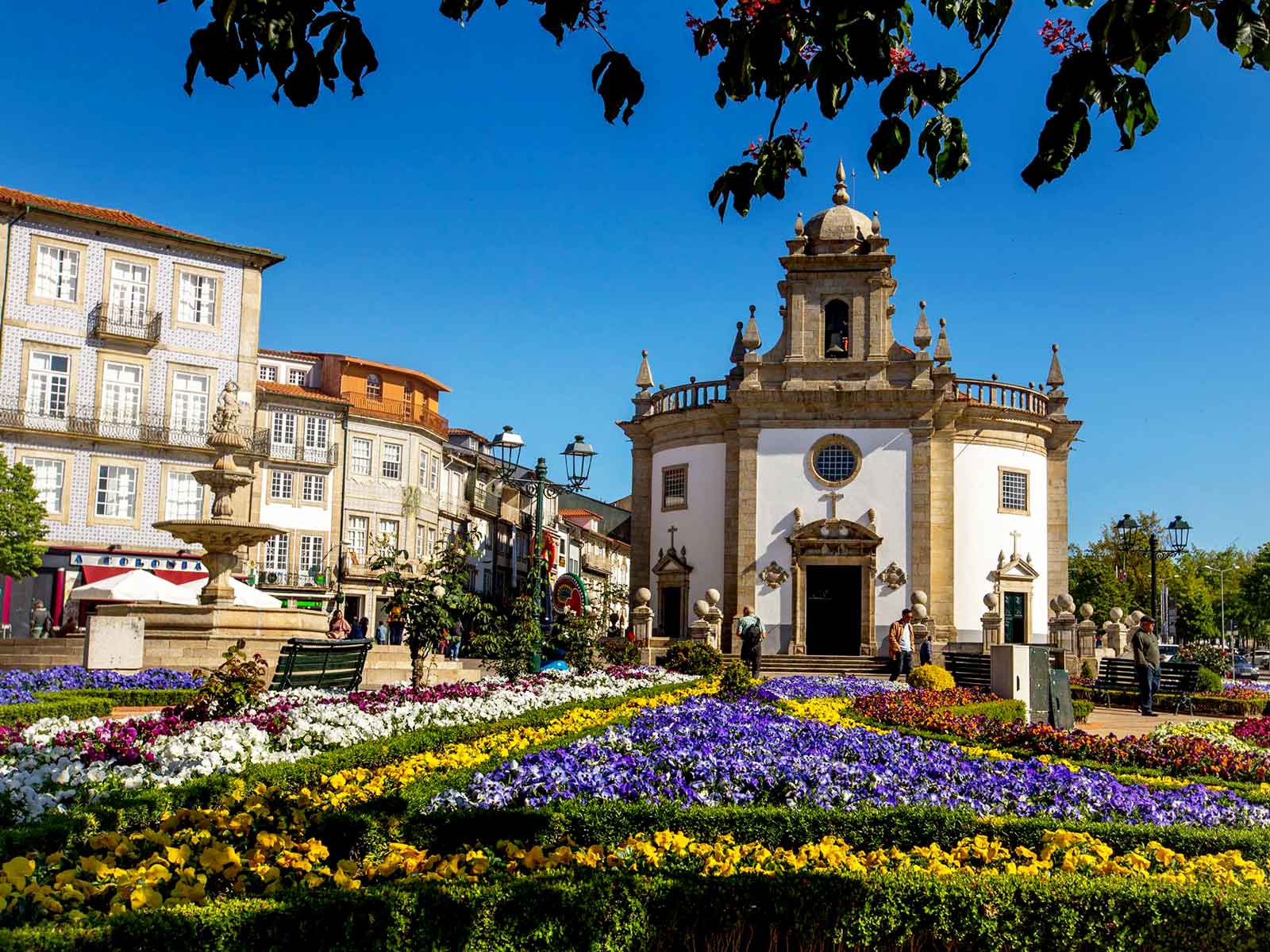
Until 1833, there was the Church of S. Julião, the former mother church of Punhete (now Constância). The frequent floods of the Tagus and Zêzere, which gradually degraded the building, and the destruction caused by the French invasions led to the demolition of the old temple.
Having operated for centuries, in times before liberalism and civil cemeteries, the old matrix and its surrounding space served as a burial place for generations and generations of inhabitants of the village. This is the reason why it is so easy and so frequent to find bones every time, due to works, the basement of the square is moved.
In the space left free, the so-called Praça Nova was organized, so called to distinguish it from the former Praça do Pelouro Velho, which no longer existed.
The name Alexandre Herculano was given to him by the City Council in March 1910, in honor of the great historian.
Despite the floods, some of which, of impressive dimensions, are marked on the corner of Rua Luís de Camões, until very recently the Square played its role as the civic, political and economic center of the town and continues to be its main hall of visits.
No information.
Source: http://www.cm-constancia.pt/index.php/pt/visitar/patrimonio#pra%C3%A7a-alexandre-herculano